
WHICH BIKE SHOULD I BUY? – How to choose your mountain bike

By Samuel • Pata Negra Adventure
Of course, which bike should I buy? is a good question, but we think there are two others we should answer before listening to hundreds of opinions from friends, forums, etc.
Why do I want it? Or rather, what am I going to do with it? And perhaps most importantly, what’s my budget?

The Wide Range of Options in Mountain Biking
In recent years, following the surge in popularity of this sport after or during the pandemic, this is the question many of us have asked ourselves when buying a mountain bike. The options and combinations are endless, and if you’re not quite sure what you’re looking for, it can be a real challenge to find the right one.
Mechanical or electric? Carbon or aluminum? Hardtail or full-suspension? 27.5-inch or 29-inch wheels? (26-inch wheels are already obsolete.) Frame geometry—and we could go on like this for quite a while.
A regular bike or an electric bike? The starting point
In this post we will talk about “lung” or “muscle” bikes (i.e., what we understand by a normal bicycle of all life, without motor). Even so, everything we will discuss below can be extrapolated to this type of electric bicycles or eBikes. But if you opt for this option you will have to put together a few more “bills” for its acquisition.
From now on everything we say is about our humble opinion as mountain biking enthusiasts. So it is not the absolute truth and is simply based on our humble experience.
We assume that we want to buy a decent bike with hydraulic disc brakes and an acceptable derailleur. Less than that is what we could consider “an iron”, that is, the typical bike displayed in large supermarkets.
Having clarified the above, let’s get started:
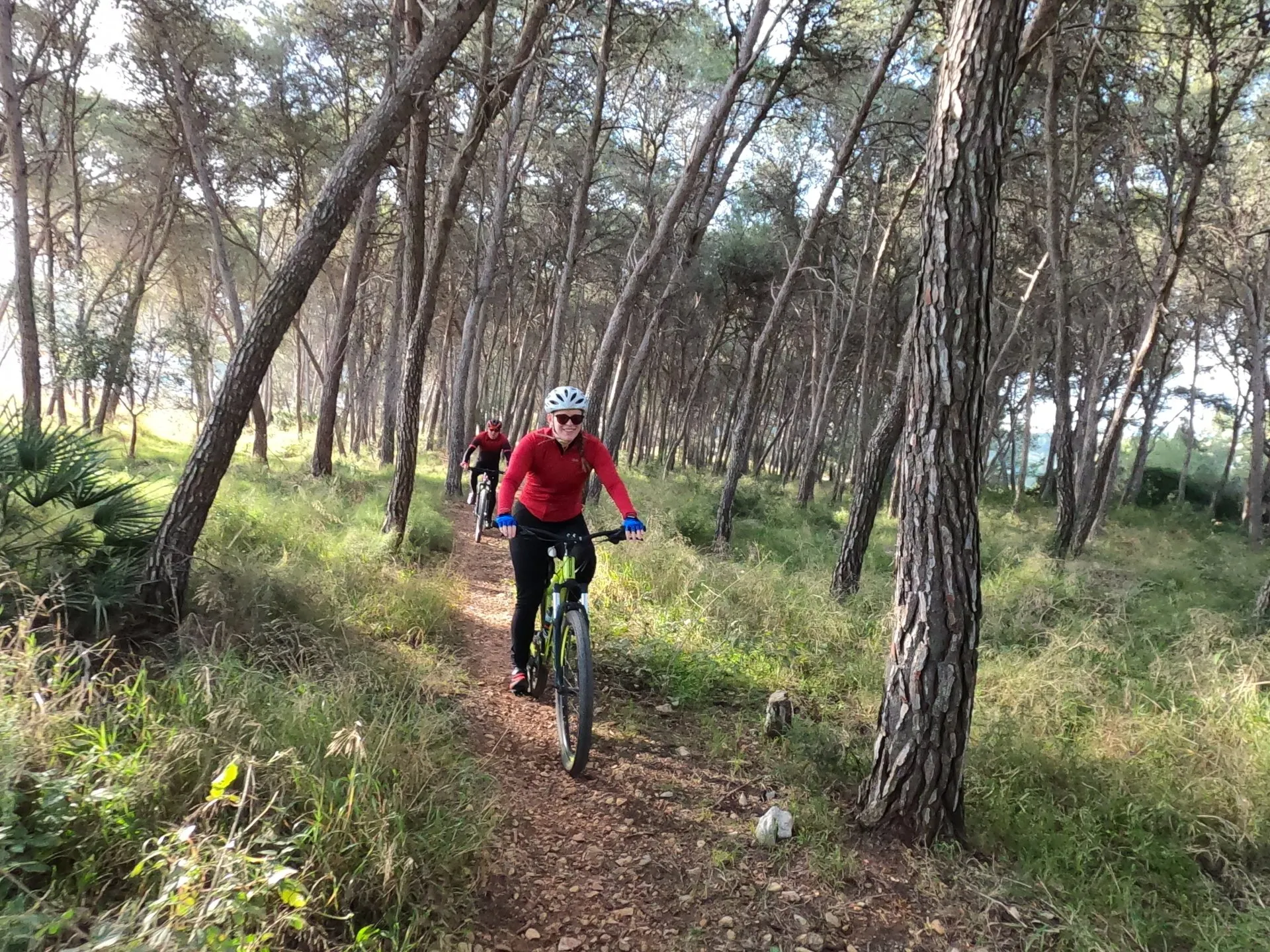

Depending on the intended use: Riding, comfort, or climbing
If we are looking for a bike to go for a ride from time to time on asphalt or at most on a small trail or forest track, do not complicate your life too much and look for something simple. In this case I would choose a rigid aluminum bike. The problem is that if you get the hang of it you will soon want to change your bike for a higher range.
If you want it for quiet rides (without competing), not too beastly with your little group, it is worth looking for comfort. In this case I would look for something with double suspension, in principle aluminum (carbon increases the price a lot). The weight will penalize you a bit but as you are not going to compete you will gain in comfort and your back and buttocks will thank you. However, if you are a born climber you might prefer a carbon rigid bike for the same price, much lighter for climbing but more “coarse” and difficult to control when it comes to throwing yourself down the trails.
Mountain Bike Racing and Choosing Tires
If you plan to compete in mountain bike races or time trials, you should look for a bike that’s lightweight and fast. In fact, almost all pros opt for carbon hardtails. Another excellent option is high-end bikes with “smart” suspension—also made of carbon, of course. The issue here is the budget, since these types of bikes can come with quite steep price tags.
So if you’re going to race, aren’t rich, and want to go fast, I’d recommend a carbon hardtail. Of course, the distance of your races is important. If they’re long-distance races, then it’s definitely worth choosing a full-suspension bike (even if it’s aluminum). Otherwise, you’ll end up completely wiped out.
As for the wheels, if you ride a lot on your routes (asphalt or track) I would not hesitate and choose 29 inches. They are bigger so logically they roll more, also thanks to that size they swallow everything, so they make it easier for those of us who are not very technical. However, the more purists defend the 27’5s because they avoid obstacles better and the start is faster.
We’ll talk about tire width and tread pattern on another occasion. But as a basic rule of thumb, the thinner and smoother the tire, the faster it is. On the other hand, the thicker the tire and the deeper the tread pattern, the more “grip” it provides, and therefore the safer it is on descents.
Trail, Cross-Country, Enduro, or Downhill
Everything mentioned above refers to trail, cross country or rally bikes, which is what a normal person understands by a mountain bike. If you are going to buy an enduro or downhill bike (different geometry, suspensions with more travel) there is no need for us to explain anything to you because you are already an expert on the subject and you probably know more than we do.